Showing posts with label writing. Show all posts

Tuesday, March 1, 2016

Interview with Associate Literary Agent Tara Carberry of Trident Media Group

Update 4/1/16: Tara has taken a non-agent job and will be leaving TMG. I'm sorry to see her go - she did a great job for me! And no, this is not an April Fool's joke!  

I've only worked with Tara a short time (my former agent, MacKenzie Fraser-Bub, left to start her own agency), and I feel very fortunate. She's a real go-getter and a pleasure to work with. Also, being a newer agent, Tara is currently building her client list, so this is a great time to query!

Q: What led you to become an agent at Trident Media Group?

A: I earned a Masters degree in English at Columbia University, and then completed internships at Norton and Perseus Books Group before landing at Trident as a literary assistant. Having the internship experience at two very different publishers has proven incredibly valuable, but I quickly realized that being on the agency side ignited more passion and excitement for me. I was promoted to Associate Agent last year and am now enjoying the constant challenges, rewards, and surprises of growing my own client list.

Q: What are some of your favorite things about being an agent?

A: My favorite thing about being an agent is the thrill of discovering new talent. The moment when I’m reading a submission and realize, “Okay, this person can really write,” is one that makes everything worthwhile. As a new agent, I’m working with many new authors, and the shared excitement of pursing new opportunities and reaching new goals or milestones for my clients is very rewarding for me. 

http://www.tridentmediagroup.com/agents/tara-carberry
  
Q: Is it all about the writing, or do you feel that agents and writers should connect personally, as well?

A: I think it is mostly about the writing, but I wouldn’t totally discount a personal connection. As anyone with an agent can tell you, it is a very close working relationship. I’m typically in contact with my clients on a weekly if not daily basis, so at the very least it’s good to have compatible communication and general working styles.

Q: What do you like to see in a query letter? What do you not like to see?

A: Likes: A strong hook; clear, concise writing; understanding of where the book will fit in the marketplace and who the reader is; demonstrated commitment to overcoming hurdles and building a presence as an author (for example, you might be part of a writing group, have won writing awards, have an active social media account dedicated to your writing, or all of the above).

Dislikes: Queries that are too long; overconfidence (ie “This will be a #1 bestseller and a blockbuster film and you’d be a fool not to give this book a chance.”); leading with personal information and not the story synopsis; books that have already been self-published – unfortunately, unless you have massive sales numbers, the odds of a traditional publisher picking up a self-published book these days are very, very slim. 

http://www.tridentmediagroup.com/

Q: How do you get most of your clients—slush pile, referrals or writers conferences?

A: All of the above plus I will sometimes approach writers myself if they are unagented or, in the case of non-fiction, seem like they have a great story to tell. 

Q: Describe some of the more outrageous things authors have done to get your attention. 

A: This happened when I was still an assistant, so it was for my boss at the time and not me, but we once had someone FedEx a hand-drawn map of their fictional world to accompany their query. It was complete with burned edges and artful rips and crinkling to make it look aged. A for effort!

Q: Are you open for submissions?

A: Absolutely!

Q: Is one time of year better than another for sending queries? 

A: No. There are times when my inbox is overflowing and it may take me longer than usual to get to each query (sorry queriers!) but I do read each one and I am grateful to receive them at all times of the year.

Q: What genres are you currently seeking?

A: I am looking for women’s fiction, thrillers, romance, horror, literary fiction and lifestyle nonfiction.

Q: Why do you feel it’s important for an author to have an agent? 

A: The publishing world requires a lot of authors today: they not only must write great books but they must understand how to connect with their audiences. It is a challenging and evolving business and, in my opinion, it is more important than ever for an author to have a knowledgeable, trustworthy agent in his or her corner. A dedicated agent allows them to not only focus on what is most important (ie, writing and growing an author platform) but also provides strategy for developing an author brand that can sustain a long career. Agents often wear many hats and, I believe, have a lot to offer authors at all stages of their careers.
 
Q: Where should writers send queries?

A: Submissions should go through the Trident website: http://www.tridentmediagroup.com/contact-us

Thanks Toby!

Monday, May 26, 2014

Being a cross-genre writer

Categorizing my writing style has always been a somewhat difficult thing. Edgar Rice Burroughs, Edgar Allen Poe, Sir Arthur Conan Doyle, Ray Bradbury, Robert Heinlein, H.P. Lovecraft, C.S. Lewis, Stephen King—these are all authors that have had a profound impact on my writing.

I also loved reading comic books as a child, everything from Tales from the Crypt and Boris Karloff’s Tales of Mystery to Shazam, The Spirit, Marvel and DC comics and everything in between. I never missed an issue of Famous Monsters of Filmland. If I wasn’t reading, I was either writing or playing music. 

http://famousmonsters.com/
  
I read a lot of classics—To Kill a Mockingbird, Lord of the Flies, Frankenstein, Animal Farm, A Brave New World, Atlas Shrugged—but I always seemed to have a predilection toward the macabre and the unusual. Working in a bookstore eventually brought me in contact with a lot of newer authors and I began to read different genres. But the ones that really kept me glued to the page were the adventure and thriller novels—Clive Cussler, Nelson DeMille, James Patterson, John Grisham, Brad Thor, Vince Flynn—the high-octane stuff.

Around 2003, when I began writing my first complete novel, I decided that I was going to blend all my favorite genres into my writing. Horror, fantasy, science fiction and adventure would all have a place in my book. I loved the life-like characters Stephen King created in his books, but I wanted more action. Clive Cussler’s adventures were captivating, but I wanted something darker, more ominous and creepy. James Rollins’ creatures were frightening, but I wanted a touch of the supernatural, creatures not bound by the laws of physics.

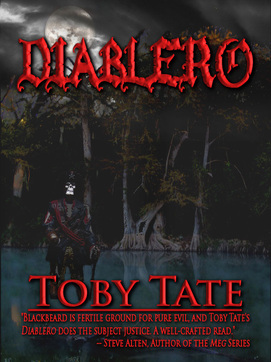
So I created DIABLERO, and brought a demon-possessed Blackbeard the pirate back to life in modern times. It was a character everyone knew, but he wouldn’t be just a pirate—he would have powers to raise an army of the dead and open a gateway to another dimension. The adventure begins in North Carolina, but ends on an island in the Bahamas. Creepy and dark, with lots of action and great characters. It was the kind of book I always wanted to read.

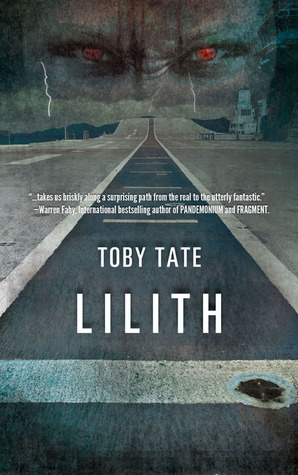
I continued my foray into action/thriller/sci-fi/horror madness with a book called LILITH, another myth that was familiar to people, yet enough of a mystery that I could add some embellishment and still make it believable. It’s my biggest selling book to date.

http://www.amazon.com/Lilith-Toby-Tate-ebook/dp/B00AV8SXKA/ref=pd_sim_kstore_1

I figured that the problem with blending all these genres together would be finding an audience. For some readers, a book that incorporates all those styles can be somewhat confusing. “I thought this was supposed to be a thriller? What’s with the supernatural stuff?” “This horror novel sucks—it’s nothing but action!” People who read thrillers don’t necessarily like horror, and people who read horror don’t necessarily like action/thrillers. Some people don’t like the supernatural aspect, while others are offended by the military/black ops aspect of some of my stories. This has been made evident by some not-so-favorable reviews. But the good reviews far outweigh the bad ones on all my books—so far.

I don’t really target audiences, or take polls, or check out the latest trends—I write what I would like to read. I feel like I’m filling a niche, here, because there aren’t many writers that do what I do. Authors who love horror read and write horror books; authors who love adventure/thrillers do the same. I’m not a purist—I happen to get an equal thrill from reading a good sci-fi book, a creepy horror novel or an engaging military adventure. But bringing it all together on the page and making it work is the biggest thrill of all.

For more info on me and my work, check out my website, or follow me on Facebook or Twitter.

Wednesday, April 23, 2014

Dealing with negative book reviews

I don’t mind negative book reviews. I really don’t. Every writer will get one at some point. I think it’s important to know what people don’t like about your writing as much as what they do like. Nobody should get pats on the back 24/7. It’s just not good for the soul. So I try to glean from them any bits of information that I can to improve my writing.

I know that a lot of authors worry that negative reviews will affect their sales…well…negatively. I have found that not to be the case. My books are still selling steadily, even with a few one-star reviews. I have seen books that remained on the best-sellers list in spite of a majority of bad reviews. People know what they like. I’m not saying reviews have no effect, but maybe not as much as we like to think.

Then there are vitriolic reviewers who will lambast you for daring to write something they don’t like. They hate your style of writing, your characters, your plot, maybe even the fact that you live on the same planet and breathe the same air they do. I have had reviewers comment that they couldn’t believe someone would publish such garbage, that only my friends gave me favorable reviews or that I wrote my own reviews under a fake name, and on and on. Not that I’m anyone special, but I can’t help but detect an undercurrent of jealousy or envy in some of those so-called reviews, especially after signing with a new publisher and a new agent.


I have found that the best thing anyone can do in those cases is to ignore it. Or do like me, and blog about it. Either way, it’s best not to engage with people who write hateful reviews. It only encourages them. Just let them fade into their own little corners of existence, and instead, focus on the good reviews and the people that support you. After all, they’re the ones you’re writing for, not the people that hate your writing.

Critique is a different thing. I love critique, especially from people who make writing their business, like editors and agents, because it makes me stronger. I like critique from readers, too, because it helps me gauge whether my audience is satisfied, or if I’m going in the right direction.

But ultimately, I have to write for myself. It has to please me first, because if I’m not really happy with what I’m doing, then what’s the purpose in writing at all? If I’m not happy with what I’m doing, regardless of the haters and the naysayers, then I’m not only letting myself down, I’m letting my audience down, as well.

For more info on me and my writing, go to www.tobytatestories.com or follow me on Twitter and Facebook.

Tuesday, September 3, 2013

How I got two book deals with DarkFuse

I have always been interested in the “behind the scenes” aspect of the publishing world. I like to know the hows and the whys of everything, so I suppose I’m doing a bit of projecting when I assume that readers feel the same way. So here goes nothing. Or something.

I have never had an agent. Every book I’ve ever read on the subject of publishing says, “Number one: Get an agent.” That didn’t work out for me. After carefully crafting and sending out approximately eighty-five query letters for LILITH, a supernatural thriller, I got plenty of interest, but no offers. 


I decided to go it alone and send queries directly to publishers instead. It took far fewer tries, about a dozen or so, before I got offers from two different houses, one of which was DarkFuse, an independent mass-market publisher. So I guess the lesson there is: it’s easier to get a publisher than it is to get an agent.

My query letters were nothing special, just a little blurb about the story, my background as a writer, why I felt my novel was different from other similar books that were out there, the word count, etc. etc. A synopsis of the storyline and the first two chapters were also included.

A couple of months after sending out the query to DarkFuse, I received an email requesting the entire manuscript for LILITH. A few weeks later, they asked me if I could cut the story to less than 70K, which I did. The next thing I knew, they were sending me a contract. Of course, I did the obligatory happy dance and called my family to tell them the good news. That particular book has been my best-selling one to date, and I am now writing a sequel.

Since they had already published one of my books, they were interested in reading my next, which was a novella called THE BLACK CHURCH, more of a straight horror story as opposed to the action-oriented thrills of LILITH. 


Again, the editor liked the book and made an offer. Although I ended up cutting a lot of it and changing the ending, I was pretty happy with the end result. The staff at DarkFuse is top-notch and very well respected in the business, so I trust them completely. The cover art for both books was beyond awesome and the editing as professional as that of any major publishing house.

The main ingredient for getting published (besides writing a great book, of course) is perseverance. Knocking on door after door, day after day, and getting rejected over and over again, is definitely not for the faint of heart, but it is part of the process of getting published. Self-publishing is fun, and I’ve done it, but there’s nothing like the validation of a company who has published hundreds of high-quality books saying, “Hey, good news—you made the cut!” Yep, I wouldn’t trade that for anything.

For more on me and my books, just go to my website at www.tobytatestories.com, or find me on Facebook or Twitter.

Thursday, June 20, 2013

Creating characters that come alive and jump off the page

Plot lines don’t mean squat without memorable characters.

Characters don’t even really have to be people. Seriously, they can be machines, aliens, animals, plants, whatever. But if they don’t drive the story, then they aren’t doing their job, and they might as well not even be there.

I’ve read science fiction stories and thrillers where things moved along at a good pace from point A to point B, but because the characters were one-dimensional, the trip was forgettable.

I base almost all my characters on real people, either people that I know or have met somewhere along the way. One of the characters in my supernatural thriller, LILITH, was an aircraft carrier called the USS Gerald R. Ford. That’s right—it was a ship. Hey, they don’t call ships “she” for nothing. Since the Ford was not yet commissioned at the time, I based it on the USS Harry S. Truman, where I had spent several days at sea. Believe me, those ships have personalities all their own, and I tried to bring that across in LILITH by describing things I had experienced while aboard the Truman.


The character of Hunter Singleton, one of the main protagonists of my stories, is based mainly on me, but also on other people I have known. He has a back story, he has a distinct personality, he has interests, dislikes, quirks, certain physical qualities—he even speaks a certain way. You can always tell when Hunter is talking, because he’s a smart ass. Kind of like me. He’s adopted, half Cherokee Indian and half white. He’s a reporter for a national news agency. He knows Kung Fu and doesn’t mind using it when necessary. And he’s usually up to his eyeballs in trouble.

Lisa Singleton, Hunter’s wife, also has certain physical characteristics and personality traits that distinguish her from other female characters. For instance, she’s a park ranger and a black belt in Wing Chun Kung Fu, which she taught to her husband. Her father is Chinese and her mother African American. She’s quite beautiful, like her mother, and small, but also pretty handy with her fists as well as with a gun. If you piss her off, she will take you down.

Lilith, the main antagonist, is more of a conglomeration of different people. I tried to make her evil, but also gave her some faults and frailties, and a back story that will make readers want to sympathize as well as be repulsed. Awesome combination!

There’s a back story with Hunter and Lisa as a couple, and I plan on getting more deeply into their personal stories as they progress through each adventure. The next book to feature them, PRIMORDIAL, is still in the writing stage.

Characters that are integral to the story should have traits that set them apart from other characters—physical traits, quirks, flaws, whatever. They should all speak with a different voice, as well, though that is sometimes hard to do. Characters who I know will only be in one scene I don’t spend as much time on, because they won’t be around long enough for anyone to really care. They’re just there to help move the plot along.

I also like to give flaws to my characters, because real people have flaws. For instance, Hunter has an inordinate fear of flying. As do I. I do not like airplanes, or even tall ladders.

In my latest book, GOD PARTICLE, my protagonist is a 16-year-old girl. Not being a 16-year-old girl myself, I had to draw from people I know, like my own wife and daughter, for instance, who helped me immensely with the character. Chloe is Chinese, adopted as a baby by a loving Swiss/American family. Hence the last name ‘Johansson.’ Not too many Chinese people have the name ‘Johansson.’

 
Chloe is also extremely intelligent, already a freshman engineering student at MIT. But she is a little bit spoiled. And selfish. And maybe a little hard headed.

Characters also need some type of friction within the story, something to overcome that will make them grow and reach beyond their own self-imposed boundaries. Just like in real life. Chloe nearly becomes overwhelmed by the events that take place in the GOD PARTICLE, but she has an amazing inner strength that helps get her through. Plus, she prays a lot.

Lively characters are extremely important to my novels. The stories are usually centered on the characters I create, and things move forward because of their actions, or inaction. Without realistic, memorable characters, the literary world can be a bland place, indeed.

For more information on my latest books, find me on the web at www.tobytatestories.com.

Tuesday, June 4, 2013

The GOD PARTICLE explodes!

I found that there were a few rules for writing THE GOD PARTICLE, a young adult sci-fi thriller, that don’t always apply to writing adult thrillers.  

For one thing, they say (they being young adult writing experts), that you should establish the age of the protagonist right away so young people will connect quickly. The first paragraph says, “I had the perfect life. I was going to MIT at the age of sixteen…” Check.

Another thing they suggest is writing in first person so readers can feel like they are right there with your character. Most of the book is in first person, except for the parts where I’m following another character, switching back and forth kind of the way James Patterson does. So again, check.

An eye-catching front cover is, of course, paramount to getting good sales. Thanks to Stan Tremblay of Find the Axis.com, I was able to comply. Check again.


I also didn’t want the book to be too wordy. I wanted it to zip along at a good pace, which I did by writing short chapters and keeping the word count at around 40,000. That’s a pretty quick read, even for someone with a short attention span like me. My previous book had short chapters, but was over 70,000 words.

The experts say to never talk down to your audience, because they may be young, but they’re also sophisticated. I wanted something intriguing, a subject that had spent some time in the public eye, and the God particle was the perfect subject.  Most everyone had heard of it, and it was still enough of a mystery that I could put my own twist on it without it seeming too far-fetched. The story involves particle physics, wormholes and multi-dimensional space, but it’s not so complicated that it loses the reader. I speak in a way any layman can understand.

Of course, there was a lot of research and fact-checking involved, but that’s true with all my novels.

Despite the age group of your readership, good characters have to populate the pages of any story to keep it interesting. Shallow, one-dimensional characters will pull your story down and your sales along with it. And you can forget any sequels. All my characters in all my books are well fleshed-out (so to speak), according to their importance in the storyline. There is a lot of dark drama involved as well, where our characters fight seemingly impossible odds. Suspense can make a good story great.

I usually make it a point to get at least one endorsement for my books. For GOD PARTICLE I managed to get Roy Huff, the #1 Amazon bestselling author of EVERVILLE: The First Pillar, who called it “…a fast-paced, fun read!” Thanks Roy!

I had a lot of fun writing GOD PARTICLE, and I think you will have a great time reading it. Pick up a copy now for only $2.99 at Amazon, B&N.com, Smashwords or Crossroad Press.

Check me out on the web when you get a chance at www.tobytatestories.com.

Tuesday, May 28, 2013

Researching the novel: Making it real and getting it right

In his book ON WRITING, Stephen King said, “Do the research, but don’t overdo it for the reader.” Writers like me should probably take that to heart. But it’s tough, because I love to make things real.

In my last book, LILITH, I wanted the reader to feel like they were there on the USS Gerald R. Ford with me. Being ex-navy, I spent many a day sailing the ocean blue on several different ships, so that experience came in quite handy when it was time to write. I also managed to spend some time aboard a carrier, the USS Harry S. Truman, which was pretty awesome. I got to stand right out on the flight deck while the jets were taking off and landing, rattling my bones until I thought they would fracture. The picture below is one I took myself of a navy jet landing in 2010.


For LILITH, I researched several different types of weapons used by Special Forces and CIA, the CIA and its methods, nuclear fission and nuclear power, DNA and genetic mutation, animal tracking, New York City, especially Manhattan Island and its layout, the abandoned New York City subway tunnels, hurricanes and weather patterns, the offices and buildings used by the mayor of New York, the type of security used by the mayor, on and on and on. I used Google maps to see exactly what the parks and buildings looked like at street level and videos to see what the abandoned subway tunnels were like. I even enlisted the help of a retired navy commander to get my facts straight about the USS Gerald Ford, which has yet to be commissioned. 

  
The research itself took a good six months, the writing another six months. In the end, I had to cut 10,000 words out of the book to secure a contract with DarkFuse, most of it having to do with the back story, via the musings of the ship’s chaplain, Commander Crane, of the creature that takes over the ship. But it was worth it, because the back story will be fleshed out in the sequel, PRIMORDIAL, which I am now writing.

For PRIMORDIAL, as with all my other books; DIABLERO (Nightbird Publishing, Oct. 2010), GOD PARTICLE (Crossroad Press, June 2013), and THE BLACK CHURCH (DarkFuse, Dec. 2013), I did most of the research beforehand. Most of the action for PRIMORDIAL will be set on the island of Crete in the Mediterranean, but there are also scenes in Romania, Turkey, Egypt, Syria, Sicily, and Washington D.C.


Since I am not an archeologist and have limited knowledge on the subject, I enlisted the help of archeologists and geomorphologists from Boston U. and NC State, and even picked up a book about the basics of archeology, just so I could get the jargon right. I looked at videos of several different dig sites on Crete, researched modern Crete and its ancient Minoan civilization, which figures heavily in the plot, and did more research on the CIA, nuclear radiation, DNA and genetic mutation. And that’s just the basic stuff.

Sometimes it seems like the research will never end. I just want to turn off the computer and say, “Forget it! I’m going fishing!” But even though I make my share of mistakes, I am a stickler for realism, and getting it right. If I say, “He walked through the gate and into the park,” you can be sure that I have either been there, or I looked it up on a recent video or photo and saw a gate in front of that park.

But in spite of all the necessary research, a writer can’t forget the most important element of any story: the human element. But I’ll save that for next time.

Are you a writer? Do you do a lot of research before you write? How do you go about it? Leave me a comment and tell me about it. If you have a question about research, feel free to leave a comment, as well.

For more information on me and my books, find me on the web at www.tobytatestories.com. Thanks for reading!

Thursday, May 16, 2013

Why writers need good editors

I’ve done the self-publishing thing, if for no other reason than to say, “I did it.” It was not my first book, however.

DIABLERO, a supernatural thriller that featured a resurrected, demon-possessed Blackbeard the Pirate, was published first in paperback by Nightbird Publishing in 2010 and then by Crossroad Press as an eBook in 2011.


So why do a self-published book, you may ask? Well, I think I can sum it up in one word: vanity. I wanted to get my collection of short stories out there, and none of my publishers wanted to publish a short-story collection. So I figured, what the hey, I’ll just do it myself. Shadowland was published as an eBook in 2011 with Amazon, Sony and elsewhere. 


I won’t say it was a bad decision—it was what it was. But only one of the stories, Gray Area, had gone through any kind of rigorous editing. The rest were stories that I had written and reworked several times. 

I hate to admit it, but it shows. Although several of the stories have since been edited and published elsewhere, (see Shadowland inVoluted Tales Magazine #2), they weren’t really the best they could be. Unfortunately, I didn’t have access to any editors that charged less than $1,000 per manuscript, which really wasn’t in my budget. 

I said all that to say this: editing really does make a difference. I love my editors at DarkFuse and Crossroad Press—they give a professional edge to my writing by making sure the story has continuity, catching grammatical and punctuation errors that I otherwise would have missed, and even helping reword things that could be said in a better, more concise way. I would have to pay someone several thousand dollars to do what they do, so I am eternally thankful to have their expertise.

For my second novel, LILITH, a supernatural thriller that puts a mythological creature aboard an aircraft carrier in the middle of the ocean, I was ready to pay a tidy sum for a good editor. But DarkFuse made an offer before I did so, and author Greg Gifune ended up being my editor, so I was happy.


My next book, GOD PARTICLE, a young adult sci-fi thriller that features Chloe Johansson, a globe-trotting sixteen-year-old MIT prodigy, is due out June 4, 2013 and will be published by Crossroad press. My editor there, David Dodd, did an excellent job catching all my dumb mistakes and I think improved my chances of getting good sales. Not a bad thing. 


If you decide to self-publish, my advice is spend the money and find yourself the best editor you can afford, one that knows the business and knows what to look for in a manuscript. Believe me, the money will be well-spent. Don’t put a half-assed manuscript out there, because readers judge you by the quality of your writing, and if one manuscript isn’t up to par, it could affect the sales of any other books you publish.

Michael Garrett, who once worked with Stephen King and other big name authors, offers an excellent service at a reasonable price for anyone who is interested. I only mention him because I was so impressed with his attitude and work ethic. There are probably many other good editors out there, but do your research and make sure they know what they’re talking about, otherwise you’ll spend a fortune and have nothing to show for it.

Saturday, November 17, 2012

Writing the supernatural action-thriller

I have always loved reading horror—Stephen King, Dean Koontz, Bentley Little, Edward Lee—I can’t explain it. It just appeals to me. I guess the thought of flawed humans overcoming insurmountable odds and saving the world from some inhuman beast or life-threatening super-organism is just, well…cool. Sure, sometimes the good guy or woman dies at the end, but that’s life. Heroes are willing to pay the ultimate price so that others may live.


One of my other loves in fiction is the thriller, whether it’s politics, crime, military, whatever. Brad Thor, Vince Flynn, Nelson DeMille, Lee Child, James Patterson, Clive Cussler—I love ‘em all.

But for a long time, there seemed to be a lack of novels that really mixed action/adventure and supernatural horror into one story. I wanted something that was creepy, but that also moved along at a good clip and had memorable characters. There were very few novelists that were doing that kind of thing—Douglas Preston and Lincoln Child, John Saul, William Meikle and Jeremy Robinson are some names that come to mind.

So I decided that I would try to create stories I would like to read, something that incorporated both supernatural horror and action/adventure. I had written some short stories, but I wanted something that would keep readers enthralled for a few days. My first undertaking was DIABLERO, a story about modern-day voodoo and the resurrection of a three-hundred year old pirate, Blackbeard. 

 
I got some good reviews for that book, sold a few hundred copies with Nightbird Publishing and Crossroad Press. But for my next story, I wanted something even bigger involving the CIA, the military, the supernatural, and some human drama. So I took characters from my first novel, Hunter and Lisa Singleton, and put them into my new book.

LILITH is a supernatural creature who takes possession of the crew of a U.S. Navy aircraft carrier, and is then set free in the streets of Manhattan after it gets demolished by a huge storm. It was a very fun book to write.


My next novel, tentatively titled PRIMORDIAL, will be on an even bigger scale, believe it or not. Did I tell you I want my stakes to be high? Even the young adult sci-fi novel I’m working on is high-octane. Can I help it if I like things to move along at a good clip? And guns? And explosions? And…and…oh, sorry. I get carried away. But you get the picture.

I tried writing “literary” horror. Yeah, that didn’t work out. I kept falling asleep and drooling on the keyboard. Shorted out a lot of PCs. Don’t get me wrong, I love the classics—Frankenstein, Dracula, The Invisible Man, Dr. Jekyll and Mr. Hyde, The Legend of Sleepy Hollow—and I owe my career to them. But modern times demand that we stretch our writing chops to mix genres that may not have been previously incorporated, e.g., the vampire western, the zombie literary classic, the sci-fi detective, and so on.

So now, I present to you the supernatural action-thriller. I hope you like it.

Tuesday, July 5, 2011

Cashing In and Selling Out

I always hear people talk about authors who are sellouts, i.e. an author that becomes popular. A good example of this is J.K. Rowling. Before becoming a multi-millionaire, Ms. Rowling lived in what most would describe as poverty, eking out a living writing books that weren’t big sellers. The same with Stephen King, who mostly wrote short fiction and taught high school English; or John Grisham, who famously sold his first novel out of the trunk of his car. All of these authors would be considered successful by most standards, but to some, they are sellouts. Why?

People come up with lots of different reasons for thinking someone is a sellout. The biggest offenders are the authors who let someone else publish their books instead of doing it themselves. In the publishing industry, most self-published books are ignored, and for good reason—most have never had the advantage of a good editor going over the manuscript. Words are misspelled, punctuation is off, grammar is atrocious, the plot has more holes than a block of Swiss cheese, the characters are shallow and one-dimensional, or the story just plain stinks.

Don’t get me wrong, I have friends that have published some wonderful books, but virtually anyone with enough money can self-publish. And when it comes time to get an agent to sell your next book, guess what? Your self-published book, unless it was a huge seller, will be counted as a big zero. Unfortunate, but that’s the way the cookie bounces.

Another form of sellout is the writer who decides to write something, perhaps in another genre, that is a breakout best-seller. The loyal fans that had been following her for the last ten or so years are incensed that said writer could do such a thing—sell out to the big corporate publishers and actually—gasp!—make money! How could she?

But it’s not about authors following current trends, though that does happen. I mean, how many vampire novels have you seen lately? But often, an author will tire of writing the same old thing and go a different direction or simply write a book that has wide appeal. A good example of this is Walter Moseley, who writes everything from science fiction to mystery and even erotica. I have author friends with four or five unpublished manuscripts who were ecstatic when they were finally able to sell a novel. Sellouts? Hardly. I call it something else—patience.

I have been asked so many times why I bother trying to find an agent or why I decided to go with an actual publisher for my first book instead of doing it myself and keeping all the rights. But guess what? I retained all the rights to my book after it got published, albeit to a larger audience than I ever could have gotten, or would have had time to get, on my own. My publisher gave me a lot of encouragement and insight, edited my book, listened to my input, printed, distributed and then marketed my book. And they even paid me!

Guess that makes me a sellout.